
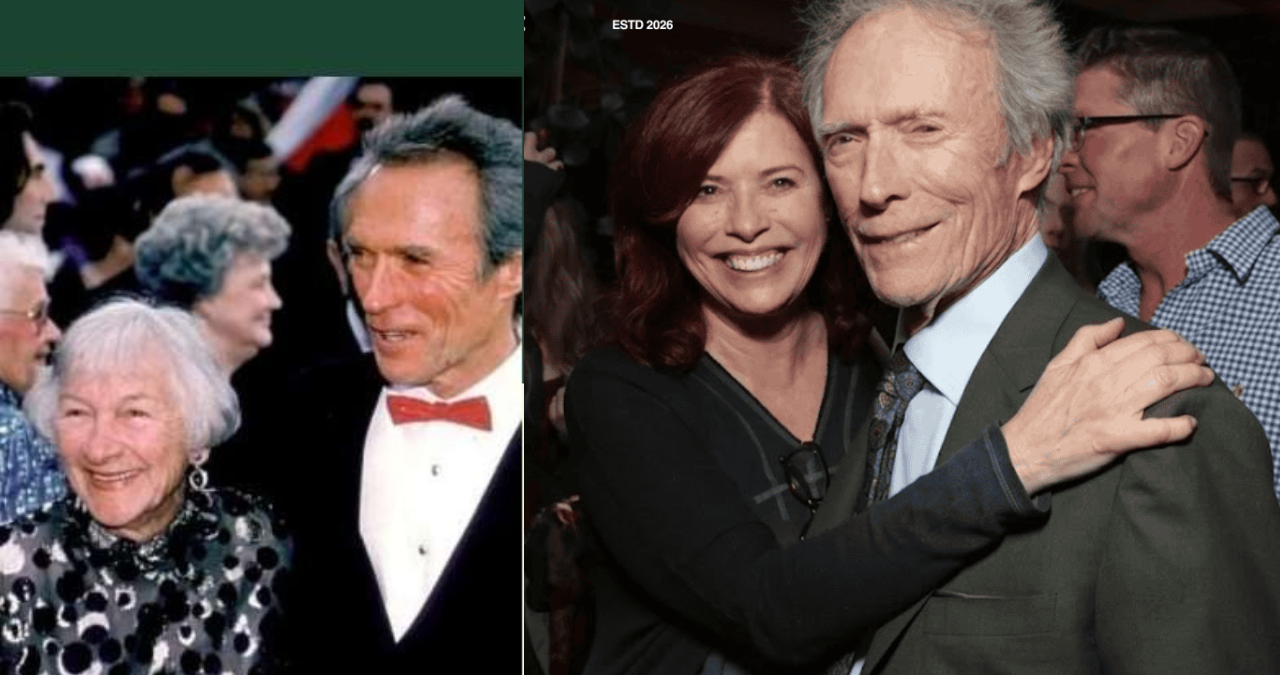
Jeanne Bernhardt: The Two Lives of a Kiwi Poet and the Eastwood Sister the World Forgot
What happens when a raw-voiced poet from New Zealand shares a bloodline with one of Hollywood’s greatest icons? You get the fascinating, complex story of Jeanne Bernhardt. She is an artist who pushed against the limits of the publishing world, but she is also the younger sister of Clint Eastwood. This article pulls back the curtain on her life, separating the punk-poet narratives from the Hollywood rumors. We will trace her journey from the isolated landscapes of New Zealand to the harsh deserts of New Mexico, and finally into the shadow of the Eastwood dynasty in San Francisco.
Jeanne Bernhardt remains a rare creature in both literary and celebrity circles. She belongs to that unique category of person who is simultaneously a hard-working artist and the sibling of a superstar. But unlike the typical paparazzi target, Bernhardt actively chose the dirt roads, the fishing boats of Alaska, and the drug counseling clinics of Australia over the red carpet. Understanding her requires you to drop the expectations of celebrity culture and pick up a beat-up copy of her poetry. Her story is not about fame by association; it is about identity, literary grit, and the bonds of a Depression-era family.
Who Is Jeanne Bernhardt? A Story of Two Worlds
There are two distinct yet overlapping versions of Jeanne Bernhardt . The first is a New Zealand writer of prose and poetry who slept rough and worked the land. The second is a private family figure whose last name was once Eastwood. Born in San Francisco on January 30, 1934, she entered the world during the grinding hardship of the Great Depression. Her parents, Clinton Eastwood Sr. and Margaret Ruth Eastwood, raised a family that would eventually produce a titan of cinema. Yet, unlike her famous brother, Jeanne has spent a lifetime cultivating anonymity.
Her choice to step away from the spotlight defines the unique duality of her existence. While Clint Eastwood’s face is known globally, Jeanne Bernhardt deliberately built a life far from the Hollywood Hills. She traded film sets for poetry readings in dingy pubs, and red carpets for the transient nature of itinerant farm work. This decision was not one of rebellion but of personal geography. She is a testament to the fact that talent runs in families, even if the recognition does not, and that a quiet life can be as rich as a public one when filled with art and purpose.
The Early Life in San Francisco: Growing Up Eastwood
Long before she became the poet we know today, Jeanne Bernhardt was just little Jeanne Eastwood, navigating the foggy streets of San Francisco. Born in the midst of the economic collapse of the 1930s, money was scarce and resilience was mandatory. She shared a modest home with her older brother, Clint Eastwood Jr., and their parents. The values instilled in that working-class household—hard work, discipline, and a distrust of pretense—would stick with her for the rest of her life, even as her brother turned them into movie scripts.
Her upbringing was classic San Francisco, long before the tech boom turned it into a glossy metropolis. The Eastwood family had deep roots, tracing their ancestry back to English, Irish, Scottish, and Dutch heritage, with a direct line even connecting them to Mayflower passenger William Bradford. Growing up, Jeanne and Clint shared the normal squabbles and bonds of any brother and sister, though their paths would drastically diverge as adults. For the public, Clint became the myth; for Jeanne, he remained just her brother, a reminder that behind every superstar is a sibling who remembers them before the fame.

The Move to New Zealand: A Different Kind of Frontier
Perhaps the most significant turning point in the story of Jeanne Bernhardt was her relocation to New Zealand. Born in 1961 in Christchurch, she didn’t just visit Aotearoa; she became its raw and unflinching chronicler. Moving to New Zealand was a culture shock that served as the ultimate artistic catalyst. The isolation of the South Island, the rawness of the townships, and the power of the Pacific Ocean gave her the emotional vocabulary she had been searching for in the United States. She traded the sanitized suburbs for the jagged beauty of the Kiwi landscape.
Life in New Zealand was not easy, and Bernhardt did not romanticize it. She was expelled from school as a teenager and left Dunedin early, choosing the school of hard knocks over the classroom. She began reading her poetry in pubs at the age of 18, a venue far removed from the academic halls frequented by her peers. This gritty start gave her voice a rare authenticity. She wasn’t a writer observing from a distance; she was a participant in the grimy realities she described, and the New Zealand literary scene took notice of this raw, unpredictable force.
Education and Academic Pursuits Down Under
Despite her rebellious exterior, Jeanne Bernhardt has a sharp, intellectual mind that she honed in the universities of Australia. She attended the University of New South Wales, where she majored in art theory and installation. This formal education separated her from the “angry poet” stereotype. She wasn’t just feeling the world; she was deconstructing it through the lens of semiotics. Her studies gave her poetry a structural complexity that pairs wonderfully with her visceral, streetwise narratives.
Australia provided her with a safe harbor to explore the academic side of her dual nature. In places like Sydney and the surrounding regions, she immersed herself in the intellectual currents of the late 20th century. This period was crucial for her development as a writer. The theoretical rigor she learned at UNSW became the scaffolding for books like Vorare Lacuna and baby is this wonderland? . It is a common misconception that “outsider” art lacks sophistication, but Bernhardt disproves that theory by blending the gutter with the gallery.
Jeanne Bernhardt’s Literary Career: Poetry and Prose
The bibliography of Jeanne Bernhardt is a tour de force of independent publishing and emotional honesty. She is the author of seven distinct works that refuse to be boxed into a single genre. Her debut, Vorare Lacuna, set the tone for a career defined by exploring the gaps in memory and the edges of society. She followed this with the startlingly titled baby is this wonderland? , a blend of short fiction and poetry that tackles the fragmentation of the modern mind. These early works established her as a provocateur who questioned the safety of “wonderland.”
Her later works include the poetry collections The Snow Poems, The deaf man’s chorus, and 26, as well as the prose collection Wood and the novel Fast Down Turk. Wood specifically is noted for its terse language and high emotional charge, set against the backdrops of New Zealand and America. Bernhardt’s voice is often described as carrying a “Beat sensibility”—unfiltered, wandering, and spiritually hungry. She writes about the loner, the drifter, and the addict, but she does so without judgment, offering only the stark mirror of literature.

Table: Key Publications by Jeanne Bernhardt
| Title | Genre | Key Themes & Reception |
|---|---|---|
| Vorare Lacuna | Poetry | Debut work exploring voids, memory, and the unspoken. |
| baby is this wonderland? | Prose/Poetry | Fragmented narratives of modern life; a critical darling. |
| The Snow Poems | Poetry | Emotional exploration of relationships and isolation. |
| The deaf man’s chorus | Poetry | Silence, sound, and the refusal to conform. |
| Wood | Short Prose | Terse, charged stories set in NZ and America. |
| Fast Down Turk | Novel | A harrowing account of a woman’s drug addiction in the Tenderloin. |
| 26 | Poetry | Collected works showcasing a maturing poetic voice. |
Recognition and Awards in the Literary World
For a poet who has often worked on the margins, Jeanne Bernhardt has collected significant accolades that prove her weight in the literary community. In 1997, she was awarded the prestigious Louis Johnson New Writers Bursary from Creative NZ, a grant designed to help emerging writers find their footing. This was a major validation from the establishment, acknowledging that her raw, pub-born poetry had a legitimate place in the national canon of New Zealand literature.
Nearly two decades later, in 2016, Bernhardt added another trophy to her shelf: the Earl of Seacliff Poetry Prize. Winning this prize later in her career solidified her reputation as a durable and respected voice in contemporary poetry. These awards are not just lines on a CV; they are markers of a writer who has refused to quit despite a life of itinerant labor and personal struggle. They stand in stark contrast to the fleeting fame of Hollywood, proving that artistic merit often comes from a place of consistent, anonymous toil.
The Itinerant Life: From Alaska to New Mexico
If you look for Jeanne Bernhardt in a university office, you will not find her. You are more likely to find her gutting fish in Alaska or herding cattle in New Mexico. To support her writing habit, Bernhardt took on a dizzying array of manual jobs. She has worked as a fisherman on a boat in the freezing Bering Sea, a farmer, a drug counselor, a librarian, and a caretaker of a cattle ranch. This is not merely a list of odd jobs; it is a masterclass in how to mine life for material.
Living in the desert of Pueblo, New Mexico, gave her a specific kind of American loneliness that bleeds into her work. The wide, empty spaces of the American Southwest contrasted sharply with the wet, green isolation of New Zealand. She has also spent time working with street kids in Australia, an experience that informed her compassionate yet unsentimental view of humanity. Bernhardt’s life is a testament to the idea that a writer does not need a trust fund; they just need a willingness to work hard and keep their eyes open.
The Truth About Jeanne Bernhardt and Clint Eastwood
A significant portion of public curiosity regarding Jeanne Bernhardt stems from her blood relation to Clint Eastwood. She is, in fact, his younger sister. However, much of the online discourse confuses her with a different person entirely. You will often find searches for “Jeanne Bernhardt YouTube” or “Jeanne Bernhardt political commentator” which refer to a different, younger individual operating in the conservative media space, not the poet or the Hollywood sibling. It is crucial to separate these identities to find the real Jeanne Eastwood Bernhardt.
The true Jeanne Bernhardt (née Eastwood) has no political YouTube channel. She has deliberately maintained a private life away from the spotlight. She is not the firebrand commentator; she is the sister who married William F. Bernhardt in 1955 and raised a family, including a daughter named Anna. While Clint Eastwood became a symbol of rugged American individualism on screen, his sister actually lived that rugged life off-screen, hauling cattle and fishing boats, never once using his name to get a book deal.
Family Ties and the Eastwood Legacy
The Eastwood family legacy is one of the most enduring in American entertainment history. Jeanne Bernhardt is the keeper of the private side of that flame. While her brother’s children (Kimber, Kyle, Alison, Scott, Kathryn, and Francesca) have pursued paths in acting, music, and modeling, Jeanne chose a path free of paparazzi. She is the anchor of the family tree, the person who remembers the values of their parents, Clinton Eastwood Sr. and Ruth Wood, before the Oscars and the scandals.
This dynamic creates a fascinating push-and-pull. For the public, Jeanne Bernhardt is defined by her connection to a megastar. But for her family, she is simply Jeanne. According to reports, the bond between Jeanne and Clint remains strong, representing a sibling connection that has survived decades of massive cultural shifts. Her existence serves as a humbling reminder that even the most famous families are, at their core, just families. The legend of the West is maintained as much by the quiet women in the background as it is by the men in the saddle.
The Beat Sensibility and Unconventional Voice
To truly appreciate Jeanne Bernhardt , one must use the lens of the Beat Generation. Critics often note her “Beat sensibility”—that raw, spontaneous, and often gritty approach to poetry that eschews refinement for realism. Like Kerouac or Burroughs, Bernhardt is interested in the underbelly of society: the junkies, the drifters, the broke poets. However, she brings a distinctly female perspective to a genre historically dominated by men, focusing not on the romanticism of the road but on the stark reality of survival.
Her chapbook, Silver City & Two More, was published by Tangerine Press in the UK, marking her first significant publication in that market. The physical production of her books often matches the content: hand-sewn, limited edition, and somewhat anarchic, as evidenced by the fact that unsold copies of certain runs are ceremonially burned and scattered into the River Wandle. This performance art aspect to publishing aligns perfectly with Bernhardt’s voice. She is not trying to be a commercial success; she is trying to document a specific, strange, and wonderful reality.
The Intersection of Art, Family, and Privacy
Jeanne Bernhardt occupies a rare space where high art meets down-to-earth privacy. Most artists would kill for the kind of mainstream recognition that a sibling like Clint Eastwood brings. Yet, Bernhardt has consistently rebuffed that attention. Her interviews are scarce, and her public appearances are rarer still. She seems to view writing not as a path to fame, but as a necessity, a way to process the world. This integrity has earned her a cult following among serious poetry readers.
In an age of oversharing, her silence is her superpower. She has maintained a “deliberately private life”. This decision is not about being reclusive or antisocial; rather, it is a strategic protection of her craft. You cannot write about the working class if you are living in a gated community. You cannot describe the hunger of a fisherman if you are dining at the Ivy. By staying in the shadows of her family’s fame, Jeanne Bernhardt preserves the authenticity of her voice. She proves that it is possible to be connected to the stars without being blinded by their light.
Jeanne Bernhardt once said in an interview, regarding her writing, “That unsettling factor is good; it keeps you on edge and when you’re on edge other things can happen.”
That philosophy applies not just to her novels but to her entire life approach.
Why the Search Confusion Matters
A significant challenge in researching Jeanne Bernhardt is the digital fog caused by multiple people sharing the same name. As discussed, there is a separate public figure—a young, conservative political commentator—who dominates YouTube and social media algorithms. If you search for political rants, you will find that person. But if you search for New Zealand poetry or the Eastwood family history, you arrive at the subject of this article.
This confusion creates a unique problem for researchers and fans. It is easy to attribute quotes or opinions to the wrong Jeanne Bernhardt. Our subject—the poet and sister of Clint Eastwood—does not engage in political commentary on YouTube. She writes books like Fast Down Turk, a harrowing account of scoring drugs in the tenderloin of San Francisco. When trying to locate the writer, one must filter out the noise of the commentator. The poet is concerned with the texture of human despair; the commentator is concerned with the headlines of the day. Recognizing this distinction is the first step to understanding the true Bernhardt.
Life in Dunedin and the Return to Roots
After her travels through Australia and the United States, Jeanne Bernhardt returned to New Zealand in 2015 to settle in Dunedin. Dunedin, a city known for its Scottish heritage, gothic architecture, and cold southern winds, is a fitting home for a writer of her temperament. It is far enough removed from the literary circles of Auckland and Wellington to allow for contemplation, yet vibrant enough to support a community of small presses like the famous Kilmog Press, which published Fast Down Turk.
Being based in Dunedin has allowed Bernhardt to oversee the release of her later works with a hands-on approach. The city acts as a repository for her archives and a stable base from which she continues to write. Returning to her adopted homeland after years abroad was a full-circle moment. It suggests that for all her wanderlust, the magnetic pull of Aotearoa was too strong to resist. The landscape that shaped her early poetry continues to nurture her in her later years.
The Significance of the Louis Johnson Bursary
Winning the Louis Johnson New Writers Bursary in 1997 was a turning point for Jeanne Bernhardt . For a writer who had spent years scraping by on physical labor, this financial grant was a lifeline. It allowed her to take a breath, step away from the fishing boats for a moment, and focus entirely on the page. The bursary is specifically designed for “new writers,” acknowledging that the career path is often messy, delayed, and non-linear, which perfectly fit Bernhardt’s trajectory.
The award also signaled to the rest of the New Zealand arts community that Bernhardt was a writer to be taken seriously. It moved her from the “outsider” file into the “emerging talent” file. While she never sought the approval of the literary establishment, this recognition undoubtedly opened doors for future publications and collaborations. It is a rare example of the institutional machine recognizing genuine raw talent before the commercial market does.
A Guide to Reading Her Work: Where to Start
If you want to read Jeanne Bernhardt , you must adjust your expectations. Do not look for her in a Barnes & Noble; look for her in the small press archives and library catalogues of New Zealand and the UK. Her books are often limited edition, hand-bound items meant for collectors and serious poetry enthusiasts. Fast Down Turk is often cited as a starting point for those interested in her prose, as it deals with the raw, autobiographical nature of her time in San Francisco.
For poetry lovers, The Snow Poems and The deaf man’s chorus represent her voice at its most distilled. Reading Bernhardt is not a passive experience. Her sentences are sharp, her imagery stark, and her themes often dark. She requires the reader to meet her halfway, in the uncomfortable space between beauty and decay. If you are tired of sanitized Instagram poetry and want to read about the real texture of life, seek out a copy of Wood, her collected short stories.
The Future and The Walking Wounded Series
The literary world waits for new output from Jeanne Bernhardt with patience. Her publisher, Tangerine Press, has included her in “The Walking Wounded Series,” a limited release of chapbooks that celebrates misfits and mavericks. The series is notoriously erratic, but her inclusion indicates that she is not finished yet. The publisher has even hinted at releasing a full collection of her stories in the near future, which would be a significant event for fans who have struggled to find her limited-run prints.
The future of her digital presence remains murky. As of now, there is no official “Jeanne Bernhardt” website dedicated to the poet. She remains analog in a digital world. For researchers, this means the primary sources are the physical books and the archives in New Zealand. However, the rising interest in her life—fueled by the curiosity about her brother—might eventually prompt a reprint of her major works. Until then, she remains a hidden gem, waiting to be discovered.
Conclusion
The story of Jeanne Bernhardt is ultimately a story of choice. She had every right to trade on the Eastwood name. She could have been a reality TV star or a tell-all memoirist. Instead, she chose the dignity of labor and the loneliness of the page. From the fog of San Francisco to the winds of Dunedin, she has charted a course that is entirely her own. She represents the forgotten sister of American mythology: the one who doesn’t seek glory, but who holds the family together through silence and strength.
As a poet, she has captured the voice of the transient worker. As a sibling, she has protected the legacy of a legend. For the discerning reader, discovering her work feels like finding a lost manuscript in a dusty attic. Jeanne Bernhardt may not want to be a celebrity, but in the pantheon of unique literary figures, she has earned a permanent, unshakable seat at the table. Her legacy is not one of fame, but of fidelity to the artistic truth.
Frequently Asked Questions
What is Jeanne Bernhardt best known for?
Jeanne Bernhardt is best known for two distinct reasons: first, as a critically acclaimed New Zealand poet and author of books like Fast Down Turk and Wood, and second, as the younger sister of legendary actor and filmmaker Clint Eastwood.
Is Jeanne Bernhardt related to Clint Eastwood?
Yes, the Jeanne Bernhardt discussed in the literary and family context is the younger sister of Clint Eastwood. Born Jeanne Eastwood in San Francisco, she is the daughter of Clinton Eastwood Sr. and Margaret Ruth Eastwood.
How many books has Jeanne Bernhardt published?
She has published seven books to date, which include poetry, fiction, and prose collections. Her notable titles include Vorare Lacuna, baby is this wonderland? , The Snow Poems, The deaf man’s chorus, Fast Down Turk, Wood, and 26.
Is Jeanne Bernhardt a political commentator?
No, this is a common point of confusion. The poet and sister of Clint Eastwood is not a political commentator. There is a separate individual with the same name who appears on YouTube discussing politics, but the writer Jeanne Bernhardt focuses solely on literature.
Where does Jeanne Bernhardt live now?
After spending many years traveling and living in Australia and the United States, Jeanne Bernhardt returned to New Zealand in 2015. She is currently based in the city of Dunedin on the South Island.
What awards has Jeanne Bernhardt won?
She has received two major literary awards: the Louis Johnson New Writers Bursary in 1997 and the Earl of Seacliff Poetry Prize in 2016. These are among the most prestigious honors in the New Zealand literary calendar.